
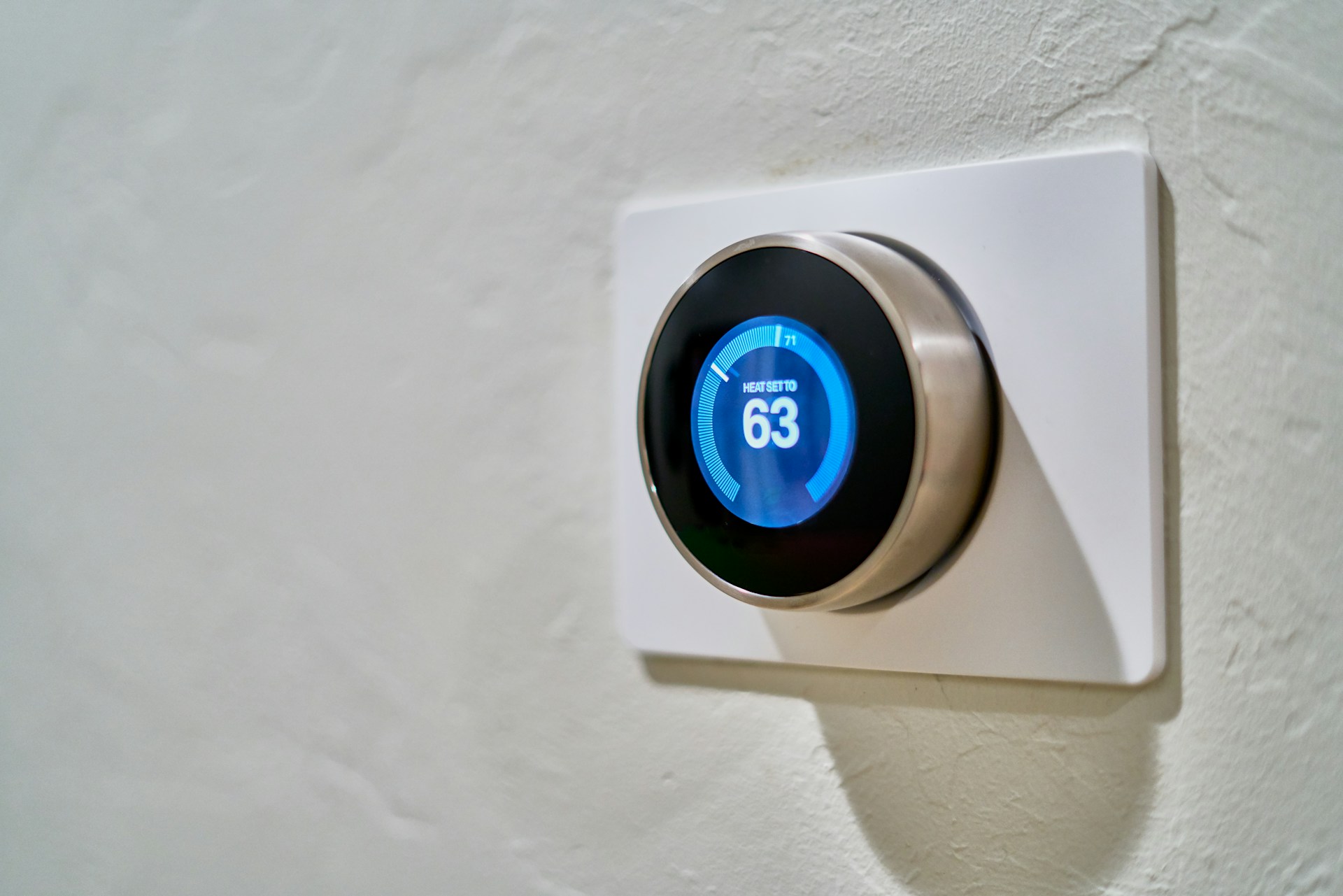
For most Charleston-area homes, the thermostat fan should be on AUTO, not ON. With the fan on AUTO, the blower stops when cooling stops, so water collected on the indoor coil can drain away. Set to ON, the fan blows across that wet coil and puts moisture back into your air. In a Lowcountry summer, that difference is easy to feel.
For most of the year in coastal South Carolina, AUTO is the better choice. In this climate, humidity decides whether a house feels comfortable as much as temperature does, and the fan setting has a direct effect on humidity. That's the setting Fix-it 24/7 recommends for most Lowcountry homes.
The two settings control only the indoor blower, the fan that pushes air through your ducts:

The setting doesn't change the temperature you've chosen. It changes how much the blower runs, and that affects moisture, comfort and your power bill.
It puts back water your air conditioner just worked to remove. When your AC runs, warm, humid air passes over the cold indoor coil. Moisture condenses on the coil, much like water beading on a glass of iced tea, and drips into a pan and out the drain line.
That water doesn't leave instantly. For several minutes after the compressor shuts off, the coil stays wet. With the fan on AUTO, the blower stops too, and the water drains. With the fan set to ON, air keeps blowing across that wet coil and carries a share of the moisture back into the house. Building research on air conditioners at part load has documented this effect.
The result is a house that reads 75°F on the thermostat but feels clammy. People then turn the temperature down, the system runs longer, and the bill goes up without the sticky feeling going away.
Moisture is a big part of what makes a Charleston summer uncomfortable, separate from the heat. Charleston's average dew point sits around 73°F in July and August and stays above 65°F from May through September. Air that humid feels heavy even when it isn't especially hot.
EPA recommends keeping indoor humidity below 60 percent, ideally between 30 and 50 percent, to limit mold and dust mites. Fix-it 24/7's indoor air quality team notes that the coastal climate often pushes indoor humidity above 60 percent, and a fan left on ON works against the air conditioner's ability to hold that line.
A simple indoor hygrometer, sold at most hardware stores, tells you where your home stands. If it reads above 55 to 60 percent in summer, your fan setting is the first thing to check when you want to reduce humidity in your house.
ON or circulate can make sense for specific, short-term reasons, mostly outside the muggy months:
Keep in mind that a blower running around the clock uses electricity every hour it runs, and if your attic ducts have leaks, more runtime means more hot, humid attic air pulled into the system. Newer variable-speed blowers use far less power on low speed, but the wet-coil problem still applies.
Usually because something besides the fan setting is limiting how much moisture the system can remove. Common causes include:
You can check the filter and your fan setting yourself. Coil cleaning, airflow settings and duct problems take a technician with the right tools.
A clean coil and a clear drain pull more water out of the air on every cycle. During an air conditioning Deep Clean and Tune-Up, a technician cleans the parts that affect moisture removal, clears the condensate drain, and checks airflow and refrigerant levels. Learn what's included in Fix-it 24/7's air conditioning Deep Clean and Tune-Up.
Dirt, dust and debris are the number one cause of air conditioning and heating breakdowns, and they hurt humidity control long before anything fails.
For homes that stay damp even when the system is clean and set correctly, a whole-home dehumidifier works with your air conditioner to control moisture separately from temperature. It's worth considering in homes with crawl spaces, bonus rooms over the garage, or family members with allergies.
Usually not. The blower uses electricity every hour it runs, and in humid weather the extra moisture can make you set the thermostat lower. AUTO is typically the lower-cost setting for Charleston summers.
Circulate runs the blower for part of each hour even when the system isn't heating or cooling. It mixes air between rooms with less runtime than ON. Not every thermostat has it.
Aim for below 60 percent, ideally 30 to 50 percent, per EPA guidance. In the Lowcountry, staying under 55 percent in summer is a comfortable target a healthy system can usually hold.
Most smart thermostats offer a scheduled fan or circulate option, which is a better choice than ON. Some can also report indoor humidity, which helps you see whether your setting is working. Our thermostat team can help set it up.
The fan setting alone doesn't cause mold, but humidity kept above 60 percent for long stretches can encourage it. Leaving the fan on ON during muggy months can keep humidity higher than it needs to be.
If your home feels sticky even with the fan on AUTO, Fix-it 24/7 can find out why, whether it's airflow, a dirty coil, duct leaks or a system that's the wrong size. Schedule an air conditioning Deep Clean and Tune-Up and ask about humidity control while we're there.